
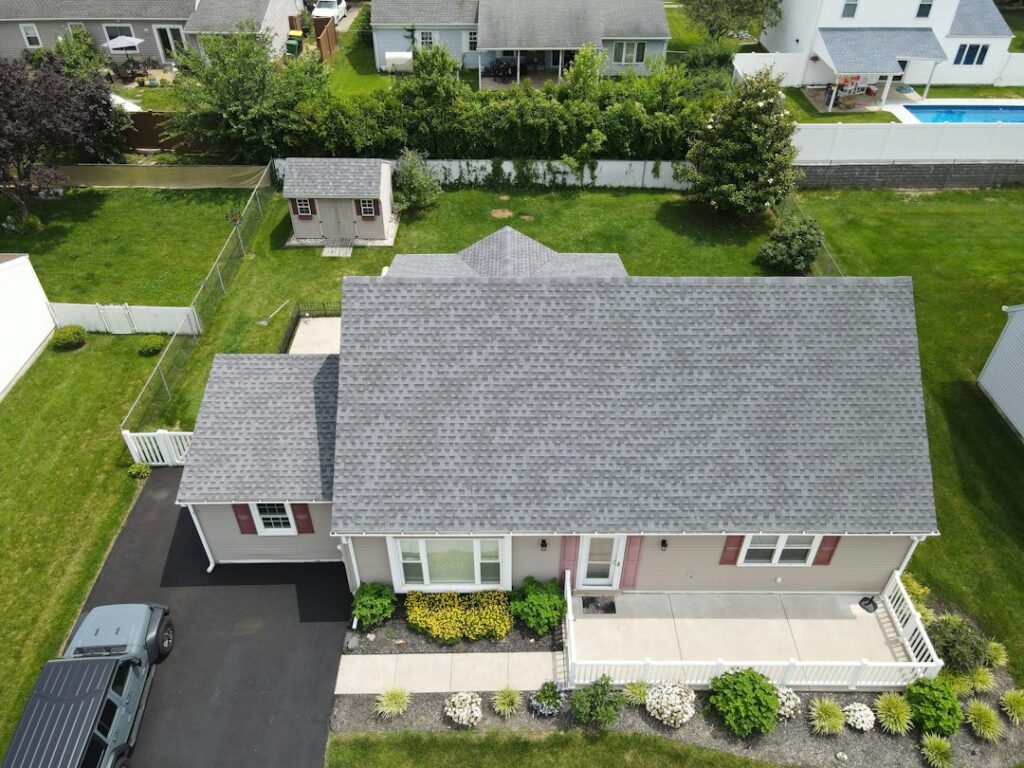
How does a new roof affect home value in Brewerton, NY?
A new roof can improve a home’s value by reducing near-term repair concerns, strengthening buyer confidence, and improving the property’s overall condition. Its financial benefit usually comes less from adding luxury and more from preventing a major expense from becoming the buyer’s problem.
For homeowners in Brewerton, roof condition can carry particular weight because roofs must withstand heavy snowfall, freeze-thaw cycles, wind, rain, ice buildup, and long periods of damp weather. A roof that appears dependable may help a home compete more favorably with similar properties, especially when buyers are comparing houses that need different levels of work.
The value increase is not always equal to the full replacement cost. Roofing materials, installation quality, ventilation, roof design, and local market conditions all influence the result.
Does a new roof usually pay for itself?
Not necessarily. A roof replacement often recovers a meaningful portion of its cost through improved marketability and reduced buyer objections, but homeowners should not assume the entire expense will be returned dollar for dollar.
A new roof tends to provide the most financial benefit when:
- The existing roof is visibly worn or near the end of its service life
- There are active leaks, missing shingles, or recurring repairs
- A home inspection is likely to identify roofing concerns
- Comparable homes have newer roofs
- The roof replacement prevents damage to ceilings, insulation, framing, or interior finishes
- The home is being prepared for sale in a market where buyers have many options
A roof that is already in fair condition may add less value than a roof that replaces a clearly failing system. In that situation, the improvement may protect the home’s value rather than create a large premium above competing properties.
Why does roof condition matter so much to buyers?
Roof repairs can be expensive, disruptive, and difficult for buyers to evaluate from the ground. A roof that appears old may cause potential buyers to wonder whether water has entered the attic, whether insulation has been affected, or whether hidden structural damage exists.
A newer roof can reduce those uncertainties. Buyers may feel more comfortable moving forward when they are less likely to face an immediate major project after closing.
Roof condition also affects how buyers interpret the rest of the home. A well-maintained roof can suggest that other exterior systems have received regular attention. That does not guarantee the condition of the siding, foundation, plumbing, or electrical work, but it can create a more favorable first impression.
By contrast, stains on ceilings, exposed underlayment, curling shingles, or temporary roof patches may lead buyers to question the property’s maintenance history.
Does a new roof improve curb appeal?
Yes, although the effect depends on the roof’s design and how well the materials fit the house. A clean, uniform roof can make the home look more cared for, especially when viewed with the siding, trim, gutters, windows, and landscaping.
The most valuable appearance improvements are usually practical rather than flashy:
- Consistent shingle color and alignment
- Clean roof edges and flashing
- Properly finished valleys and penetrations
- Gutters that are securely attached and free of visible damage
- Ventilation components that are installed neatly
- A roof color that suits the home’s exterior
A new roof will not correct every curb-appeal issue. If the siding is faded or the gutters are damaged, the roof may look newer while the rest of the exterior still appears neglected. Coordinating visible maintenance can help the improvement feel complete without turning the project into an unnecessary renovation.
What roof features influence resale value?
The roof’s age is only one part of the value equation. Buyers and inspectors may also pay attention to the following:
Installation quality
A new roof can create problems if it is installed over damaged decking, uses poor flashing details, or has inadequate ventilation. Correct installation matters because premature failure can erase much of the expected benefit.
Ventilation and moisture control
Proper attic ventilation and insulation help manage heat and moisture. In a cold climate, poor ventilation can contribute to condensation, uneven roof temperatures, and ice buildup along roof edges. A replacement that ignores these conditions may look new without solving the underlying problem.
Flashing and roof penetrations
Chimneys, skylights, plumbing vents, walls, and roof intersections are common areas for leaks. Buyers may be more confident when these details appear properly sealed and finished.
Documentation

Receipts, permits where required, material information, warranties, and maintenance records can help establish what work was completed and when. Clear documentation may also make it easier to answer questions during a sale.
Compatibility with the home
The roof should suit the structure. A replacement that changes the roofline, drainage pattern, or ventilation arrangement without proper planning can create functional concerns even if the materials look attractive.
Is replacing a roof before selling always a good idea?
No. The timing depends on the roof’s actual condition, the expected selling schedule, and the cost of other improvements that may matter more.
Replacing the roof before selling may make sense if the existing roof is leaking, visibly failing, or likely to prevent financing or insurance approval. It may also help if buyers in the area strongly prefer homes that are ready for immediate occupancy.
Waiting may be reasonable when the roof is older but still serviceable, particularly if a seller is prepared to price the home honestly and disclose known concerns. Some buyers prefer to choose their own materials and may value a credit or price adjustment more than a recently completed replacement.
A pre-listing inspection can help identify whether the roof is a serious sale obstacle or simply an older component with remaining useful life. The decision should be based on condition and market strategy rather than age alone.
How does local weather affect the calculation?
In Brewerton, winter exposure is a practical part of the roof-value equation. Snow loads, ice, strong temperature swings, wind-driven precipitation, and repeated freezing and thawing can reveal weaknesses that may not be obvious during mild weather.
A roof that handles these conditions well may reduce concerns about:
- Water entering around flashing or roof penetrations
- Ice-related leakage at roof edges
- Shingle damage after wind events
- Blocked or poorly draining gutters
- Moisture in attic insulation
- Deterioration of roof decking
This does not mean every home needs the most expensive roofing system available. It means that durability, drainage, ventilation, and careful installation may matter more than appearance alone.
What should homeowners avoid if value is the goal?
The biggest mistake is treating a roof replacement as a cosmetic project only. Covering visible wear without addressing ventilation, flashing, decking, or drainage can leave future buyers with the same concerns.
Homeowners should also avoid choosing materials solely because they are inexpensive or fashionable. A roof that conflicts with the home’s style, requires unusual maintenance, or has a short expected service life may provide less value than a straightforward, durable replacement.
Finally, avoid assuming that a new roof excuses poor disclosure. Known leaks, previous repairs, or interior water damage should be documented honestly. A sound roof improves value most when it is part of a broader pattern of responsible maintenance.
What is the practical takeaway?
A new roof can improve a home’s value, but its strongest contribution is often risk reduction. It can help buyers feel that they are purchasing a stable, usable home rather than inheriting an urgent repair.
The most reliable value comes from a roof that is properly installed, suited to local weather, supported by clear records, and integrated with the home’s drainage and ventilation systems. In many cases, replacing a failing roof protects resale value more effectively than adding decorative upgrades that do not address a major structural concern.
